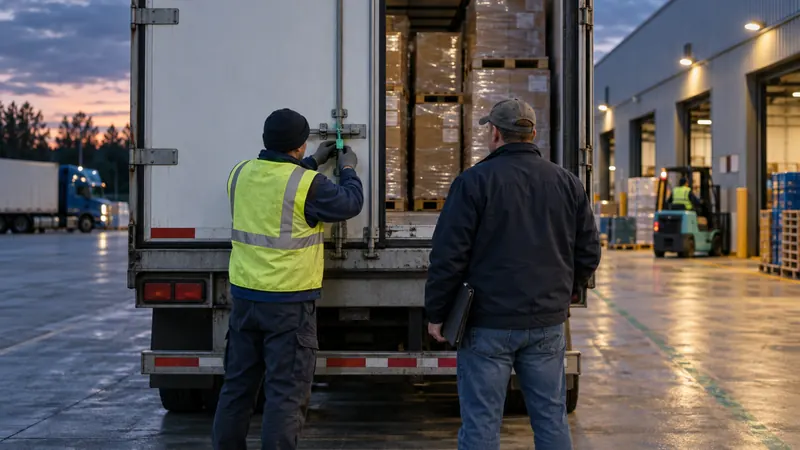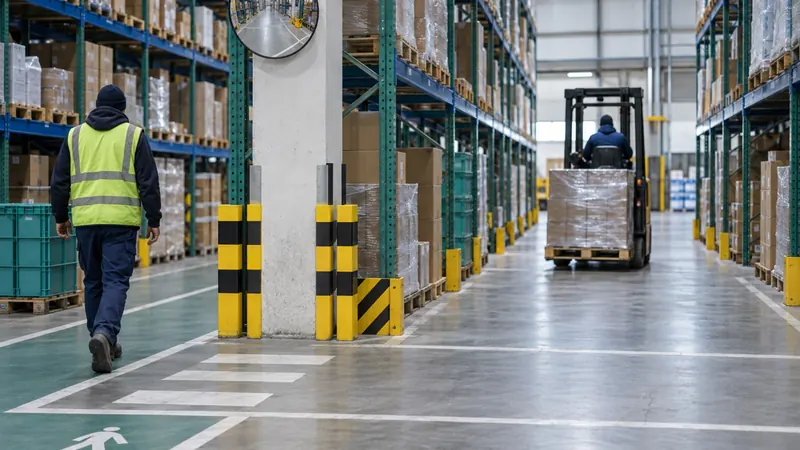
A sanitary inspection of a food warehouse in Mexico starts on the floor, not in the office: how goods are stacked, whether cases touch the floor or the wall, where cleaning products are kept, what the cold room thermometer reads and whether the oldest lot can be identified. Most of these points are set out in one standard.
For US food companies, the logic is similar to FDA's current good manufacturing practices and the FSMA rules, but in Mexico the reference is a federal Official Mexican Standard enforced by the health authorities.
What NOM-251 is
NOM-251-SSA1-2009, Hygiene practices for processing food, beverages or dietary supplements, published in Mexico's Official Gazette, applies to establishments that process these products, and processing includes storage and distribution. The federal health authority is COFEPRIS, Mexico's counterpart to the FDA for these products, which carries out oversight together with state health authorities.
This article summarizes the sections that most affect the warehouse. It does not replace reading the standard or the advice of your quality or regulatory lead in Mexico.
What it requires for storage
Section 5.4 sets out:
- Conditions suited to the product, with controls that prevent contamination (5.4.1).
- Chemicals kept separate: detergents, cleaning agents and toxic substances in a separate, marked area away from any food handling or storage area, in closed, labeled containers (5.4.2).
- Goods off the floor: raw materials and products on tables, stacks, pallets, shelving or any clean surface that prevents contamination (5.4.3).
- Air circulation between goods (5.4.4).
- Stacking without damage, avoiding broken or leaking packaging (5.4.5).
- Cleaning tools stored in a specific place (5.4.6).
Temperature, rotation and obsolete product
Under operational controls, the standard requires:
- Refrigeration at 7 °C (44.6 °F) at most (5.5.2), and freezers at a temperature that keeps the product frozen (5.5.3).
- No cross-contamination between raw materials, work in process and finished product (5.5.4), and no contact between processed and unprocessed products (5.5.5).
- Periodic removal of useless, obsolete or out-of-spec products and materials (5.5.6).
Under raw material controls, it requires storing and identifying products so that a FIFO system can be applied (5.6.9; the Spanish acronym is PEPS), not using raw materials past their expiration date (5.6.2) and separating unfit ones (5.6.4).
In practice, many food warehouses apply FEFO (first expired, first out), which ships the lot that expires first. When receipt dates and expiration dates follow the same order, the result matches FIFO; when they do not, FEFO prevents a shorter-dated lot from remaining in stock.
Records and recalls at plants
For food, beverage and supplement plants, the standard adds documentation. Among storage and distribution records it lists receipts and issues with product, lot, quantity and date, and refrigeration or freezer temperature with date, time, equipment number and reading. Section 6.7 requires a recall plan for any lot that poses a health hazard, keeping recalled product in a specific, marked area and recording each recall with date, cause, product and lot, among other data. US exporters will recognize the overlap with the traceability records their US customers already request.
Warehouse checklist
- No case directly on the floor or against the wall.
- Chemicals and cleaning supplies in a separate, closed, labeled area.
- Cold rooms at 7 °C or below, with temperature records.
- Every lot identified with its date, on the label or in the system.
- FIFO or FEFO applied by the system, not from memory.
- A marked quarantine area for held, rejected or recalled product.
- Expired or out-of-spec product separated, with a defined disposition.
- Lot-level receipt and issue records available on request.
How Chainlink helps
In Chainlink WMS, products are controlled by lot with a required expiration date; lot and expiration are captured at receiving, including from GS1-128 labels, and receiving stops when a lot expires before the product's minimum shelf life. At picking, Chainlink allocates the lot that expires first (FEFO) and the handheld validates the scanned lot. Stock in quarantine or in the returns zone is not allocated to picks, and every movement is kept in the history with product, lot, quantity, user, date and time, so you can look up where each lot was shipped. Chainlink does not measure or record temperatures; that stays with the refrigeration equipment or a monitoring system.
Frequently asked questions
Does NOM-251 apply to a warehouse or only to plants?
It applies to establishments that process food, beverages or supplements, and processing includes storage and distribution. Some provisions, such as certain records, are specific to plants. Confirm with your regulatory lead which sections apply to your site.
What temperature does NOM-251 require for a cold room?
It requires refrigeration equipment to be kept at 7 °C (44.6 °F) maximum and freezers at a temperature that keeps the product frozen.
Does NOM-251 require FIFO or FEFO?
It requires identifying and storing products so that a FIFO system can be applied. Many companies apply FEFO, which ships the lot that expires first.
Share this article: LinkedIn