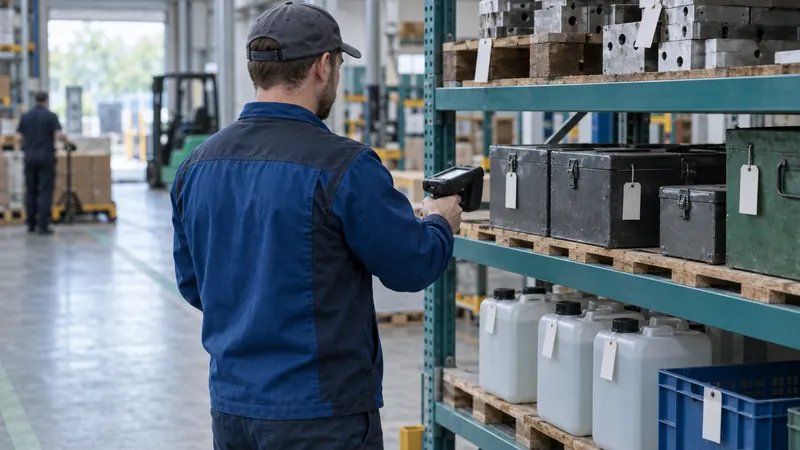
An unreadable label forces manual entry of the code, which makes it easier to record the wrong product or location. The choice between direct thermal and thermal transfer is therefore not only a purchasing decision: it depends on how long, and under what conditions, each label must remain readable.
How each technology works
Direct thermal
The label has a heat-sensitive coating. The printhead heats dots and the coating darkens. There is no ribbon and no ink. It is the technology behind receipts and most carrier labels.
- Advantages: no ribbon, faster roll changes and fewer components subject to failure.
- Limits: the print degrades with heat, sunlight, friction and some chemicals, and the background can darken over time. It only works on thermal paper labels.
Thermal transfer
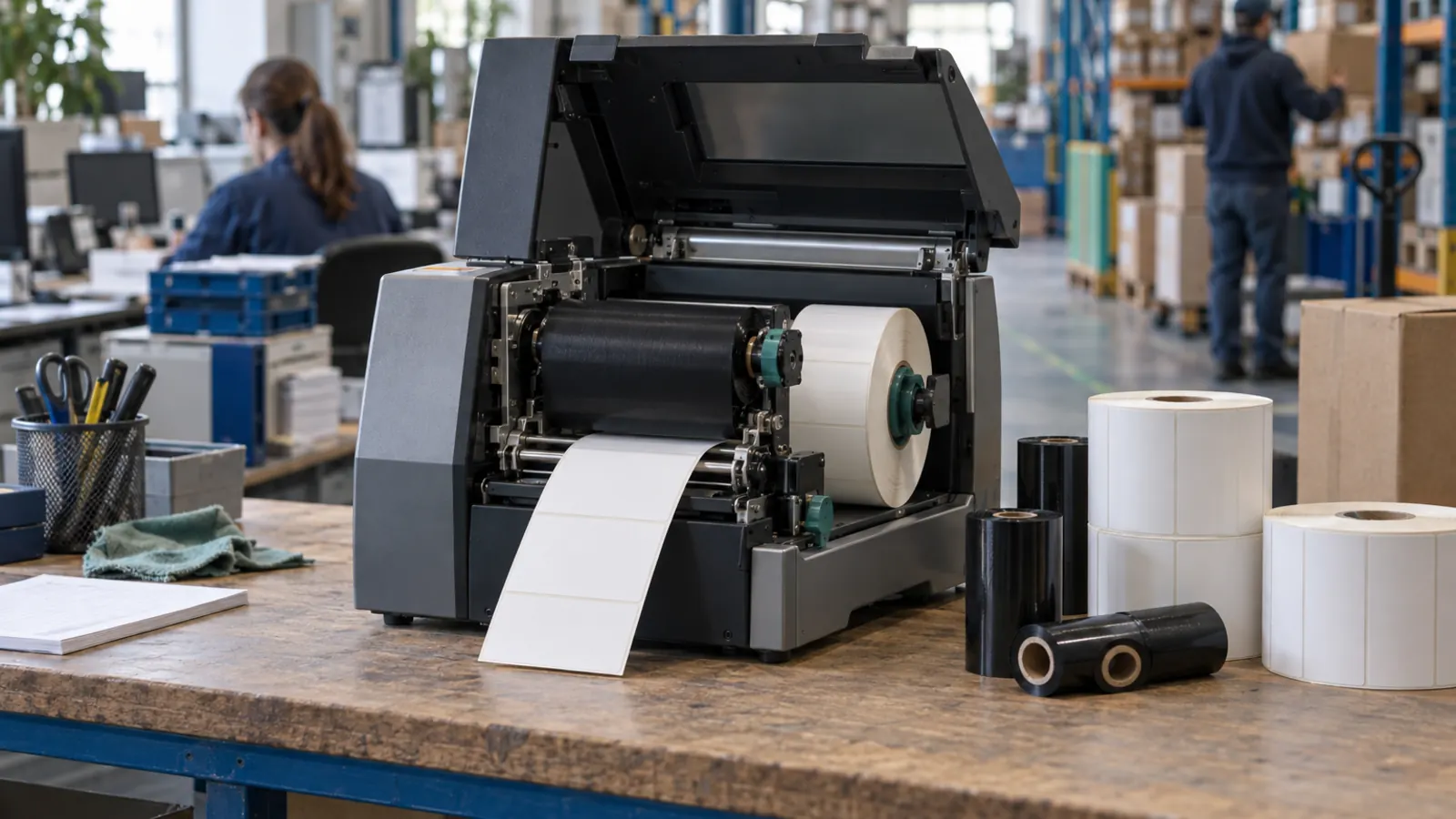
The printhead heats a ribbon and the ink melts onto the label. The label can be paper or synthetic (polypropylene, polyester).
- Advantages: stable print for months or years that resists abrasion, light and moisture and, with the right ribbon, solvents and extreme temperatures. Works on many materials.
- Limits: ribbons must be bought, loaded and changed, and the ribbon and label must be matched.
Many industrial printers support both technologies: direct thermal without a ribbon and thermal transfer with one.
Ribbon types
| Ribbon | Label material | Withstands | Typical use |
|---|---|---|---|
| Wax | Paper | Normal indoor handling | Product and case labels with medium turnover |
| Wax-resin | Coated paper, some synthetics | Abrasion, moisture, refrigeration | Pallets, indoor locations, refrigerated product |
| Resin | Synthetics | Solvents, heat, outdoors, freezing | Long-life locations, chemicals, outdoor use, assets |
Your label supplier can recommend the combination for your case. Request samples and print them on your own printer.
Which fits each warehouse label
| Label | Required life | Recommended technology |
|---|---|---|
| Carrier shipping label | Days | Direct thermal |
| Package or packing list label | Days or weeks | Direct thermal |
| Reserve pallet label | Weeks or months | Thermal transfer, wax-resin |
| Product or case label with lot and expiration | As long as the product lasts | Thermal transfer |
| Rack location label | Years | Thermal transfer on synthetic, wax-resin or resin |
| Cold room or freezer | Months, with condensation | Thermal transfer with low-temperature label and adhesive |
| Outdoors or yard | Years, with sun and rain | Thermal transfer, resin on synthetic |
A common mistake is printing location labels on direct thermal paper because it was the media loaded in the printer. Within a few months, labels near windows or lights can no longer be read.
The total cost
The price per roll alone does not reflect the cost. For each label type, add up:
- The label, per piece.
- The ribbon, per meter printed (thermal transfer).
- Printhead wear, which depends on material, speed and print temperature.
- Reprints: every label that fades or will not scan gets printed again, and in the meantime the code is entered by hand.
For locations and product, thermal transfer usually costs less over the label's life because it is printed once. For shipping, direct thermal is usually the more economical option.
How to test before buying in volume
- Print samples of each label type on your printer, at your usual speed and darkness.
- Place them where they will be used: on the rack by the window, in the cold room, in the yard, on a case that gets stretch-wrapped.
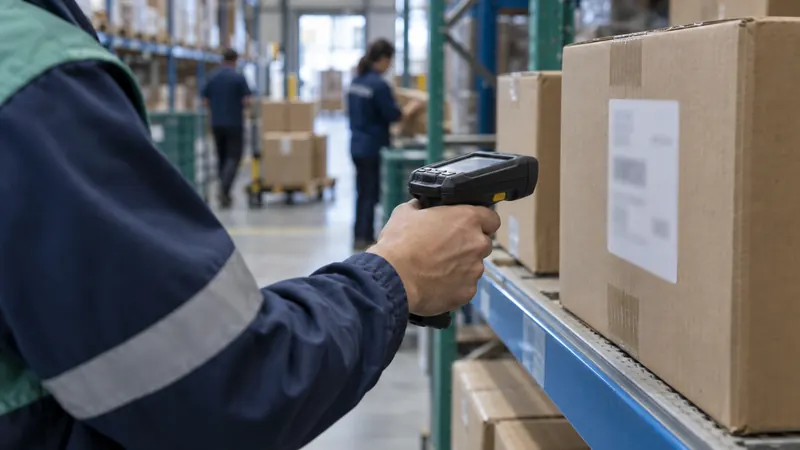
- Scan them weekly for a month with the handheld your staff uses, at real working distance.
- Rub and wet a sample to simulate daily handling.
- Check the adhesive: a readable label that peels off also fails its purpose; in the cold or on dusty surfaces, adhesive is as important as print.
How to store labels and ribbons
Direct thermal rolls react to heat and light even before printing. Store them cool, dry and dark, in their original packaging, and use the oldest first. Ribbons are also damaged by heat and dust. A roll kept by a window or on top of a battery charger can print with a gray background or gaps.
Print quality
A well-printed label meets the barcode's size, quiet zone and contrast requirements. GS1 defines how print quality is graded for its barcodes, and its logistic label guideline describes the format of case and pallet labels. Check regularly that codes scan on the first try; a dirty or worn printhead leaves white lines that prevent scanning.
How Chainlink handles it
In Chainlink WMS, product, location and pallet label templates are designed with their size, your printer's resolution, text, barcode or QR code and variables such as item code, lot or expiration date, with a preview. Labels print from the web or the handheld on Zebra printers, and Chainlink Wizard detects the printer on the network, sets it up and calibrates the media. Each connected printer uses a printer license. The Zebra ZT610R is field-verified with Chainlink for network discovery, setup, media calibration and a test label. Chainlink does not sell labels or ribbons.
Frequently asked questions
How long does a direct thermal label last?
It depends on the paper and the environment. Indoors, away from sun and heat, it is usually enough for shipping and short-lived documents; exposed to light, heat or abrasion, it degrades sooner. For labels that must last years, use thermal transfer.
Can the same printer support both technologies?
Many industrial printers support both modes: without a ribbon they print direct thermal and with one, thermal transfer. Check your model's specifications.
Which ribbon is used for location labels?
Indoors, wax-resin on a synthetic label is usually enough; for cold rooms, outdoors or chemicals, use resin. Test samples in your real environment.
Share this article: LinkedIn