In an RFID pilot, the decisive test is to place a tag on the real product and read it with the real reader. On cardboard and textiles, standard labels usually read correctly. On a steel spare part, a metal drum, a can or a water jug, they often do not read at all or only at short range. The cause is not a reader fault but the physical behavior of the signal.
Why metal and liquids make reading hard
UHF RFID tags that follow the EPC Gen2 protocol draw energy from the reader's signal and respond by reflecting it. In the US, UHF readers operate in the 902 to 928 MHz band; Mexico uses the same band under its standard NOM-208-SCFI-2016, so equipment bought for US sites generally matches regionally, though each model should be confirmed for Mexico.
- Metal reflects the signal. An antenna placed directly on metal is detuned: the surface changes its behavior and the tag receives little usable energy.
- Water absorbs the signal. Water-rich products (beverages, cleaners, moist foods) absorb part of the energy before it reaches the tag, especially when the tag sits on the side away from the reader.
- Combinations are the hardest: cans with liquid, aerosols, packaging with metallized film.
Which tag types exist
| Surface | Tag type | How it works | Notes |
|---|---|---|---|
| Cardboard, dry plastic, textile | Standard adhesive label (inlay) | Antenna printed on paper or film | Cheapest; printed and encoded on RFID printers |
| Metal | On-metal tag | A spacer layer moves the antenna away from the surface, or the design uses the metal as part of the antenna | Thicker and pricier; some can be printed on compatible printers |
| Metal in harsh environments | Rigid or encapsulated tag | Plastic or ceramic housing, fixed with screws, rivets or industrial adhesive | For assets, returnable containers and drums |
| Liquids | Standard label in the correct position or a tag designed for liquids | Placement keeps the liquid from sitting between tag and reader | On the cap, neck or shoulder, or on the outer case |
The RAIN Alliance, the UHF RFID industry association, publishes resources on applications and tag selection. Manufacturers state, for each model, which surfaces it is tested on and its read range.
What to tag
Before choosing a tag, decide what gets tagged:
- The unit: item-level traceability, higher cost and more difficulty on metal and liquids.
- The outer case: usually cardboard; reads correctly and is sufficient to receive, count and ship by case.
- The pallet: one tag per pallet to validate inbound and outbound with a portal.
Many operations with metal or liquid products tag the case or the pallet, not the unit, and reach the project's goal with standard labels.
How to test before buying
- Pick three or four candidate tags per surface, including a standard one as a baseline.
- Apply them to the real product in two or three positions.
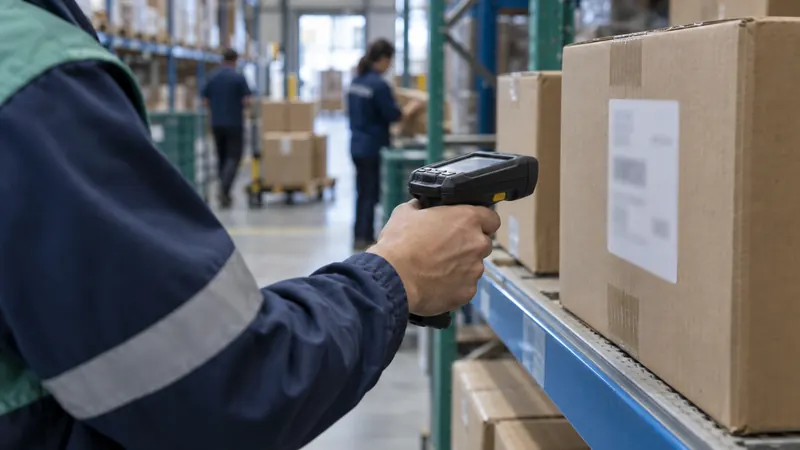
- Read under real conditions: product on the rack, next to identical items, with the handheld or portal that will be used.
- Measure three indicators: share of tags read, read range and time to read a full case or pallet.
- Repeat with the product stacked: a tag that reads alone may not read when surrounded by cans.
- Check adhesive and durability: cold, moisture, handling, cleaning.
The article on RFID implementation mistakes explains why omitting this test is the most common cause of projects that fall short of their objectives.
How it fits in the budget
On-metal and encapsulated tags cost considerably more than a standard adhesive label. That is why the decision of what to tag (unit, case or pallet) affects the budget as much as the tag model.
How Chainlink uses it
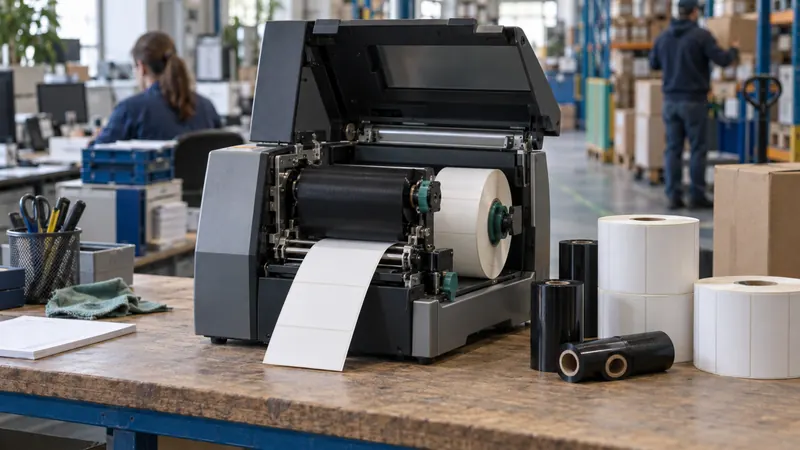
In the Professional and Enterprise plans, Chainlink WMS reads EPC Gen2 UHF RFID tags with handhelds and portals and links each registered EPC to its product, pallet or location. Reading is field-verified with the Zebra TC27 with RFD40 sled, the Zebra FX9600 fixed reader and the STid SPECTRE. Chainlink writes and registers the EPC when printing on a compatible RFID printer; the Zebra ZT610R is verified for media calibration, with RFID encoding still to be verified with an RFID roll. Chainlink does not sell tags: they are purchased from a reseller, and testing them on your product is part of a pilot.
Frequently asked questions
Can RFID be used on metal products?
Yes, with tags designed for mounting on metal, or by tagging the case or pallet instead of the unit. A standard label placed directly on metal usually reads poorly.
Why do tags on bottles of liquid not read?
Water absorbs the UHF signal. Placing the tag on the cap, neck or outer case, or using a tag designed for liquids, usually solves it. Test several positions with your product.
Which RFID tag is right for each product?
The one that passes the test with your product, packaging, racks and reader. Manufacturer data sheets help select candidates; a test under real conditions determines the choice.
Share this article: LinkedIn