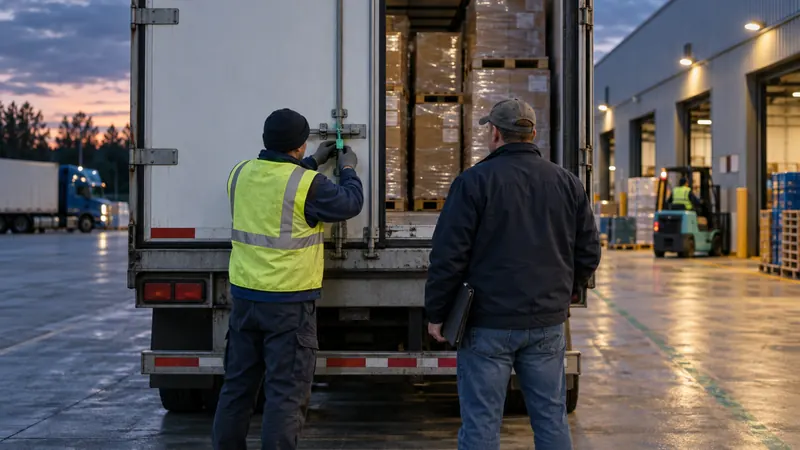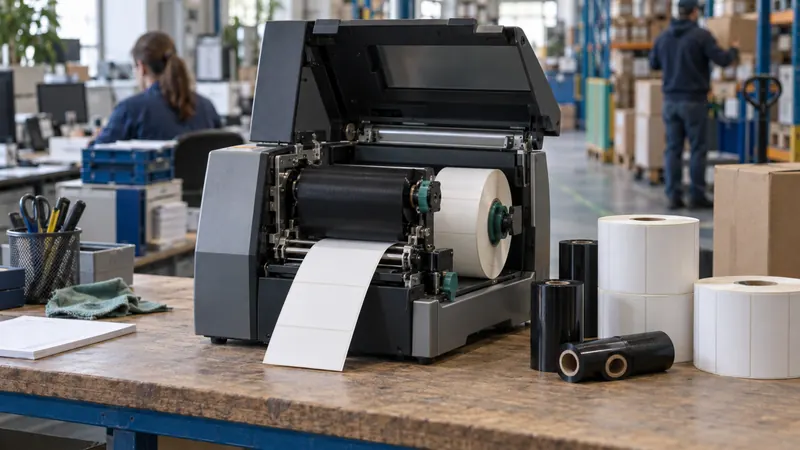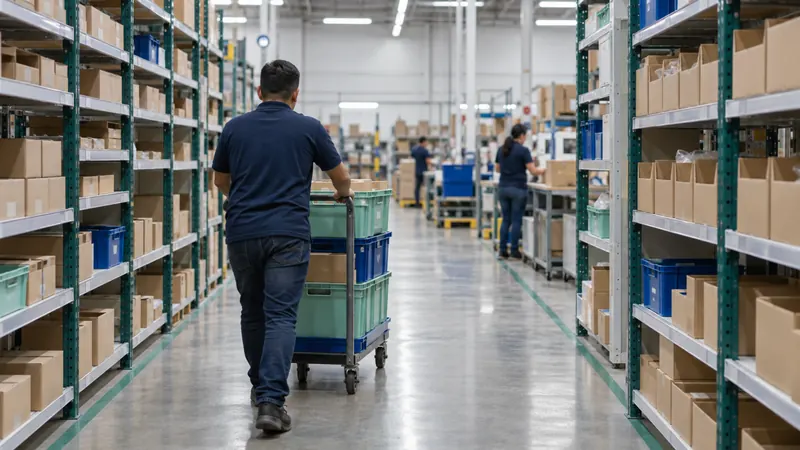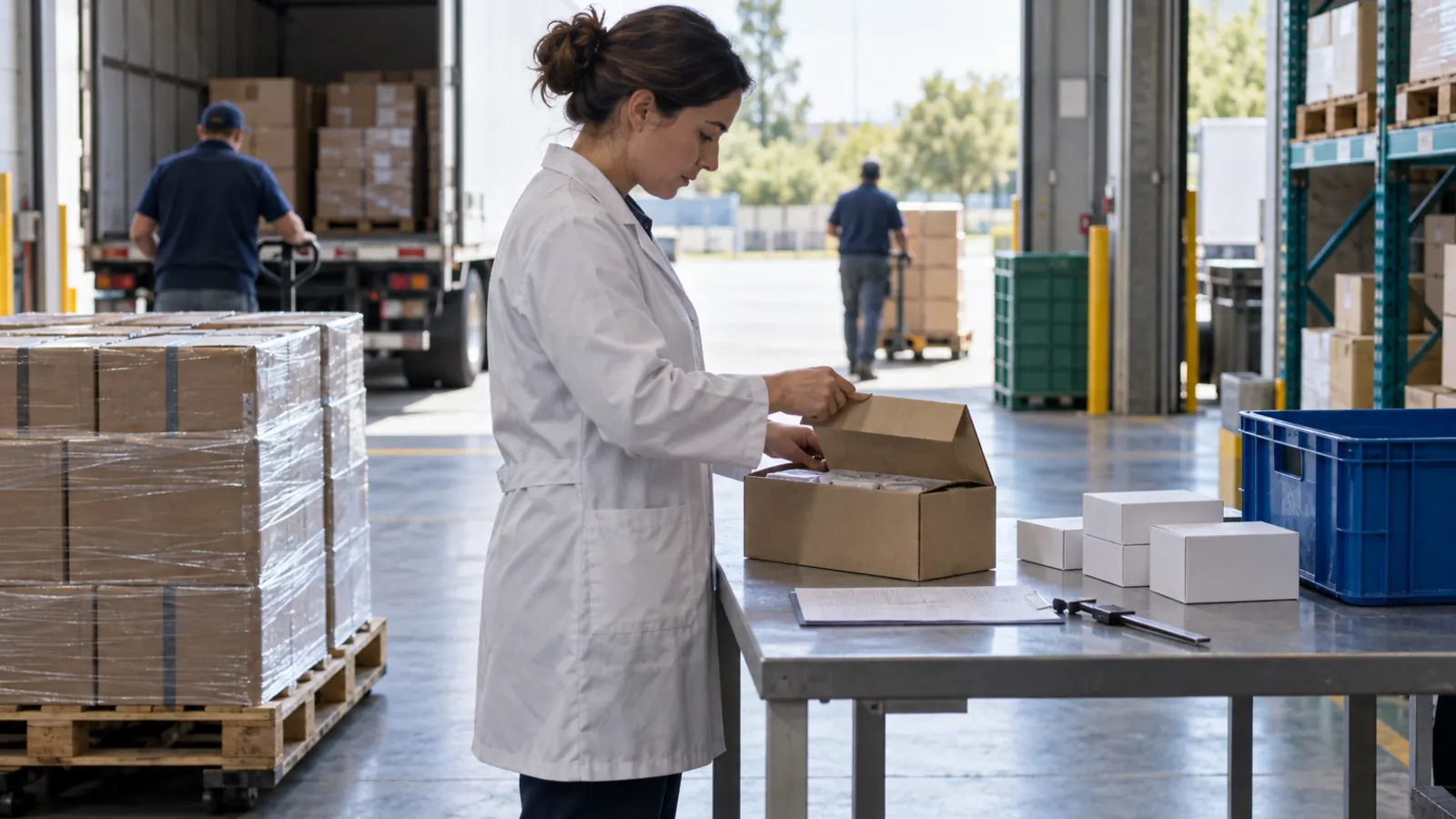
A defective lot that enters inventory as available is put away, picked and shipped. Stopping it at that point means a recall, returns and a customer claim; stopping it at the dock takes a few minutes of inspection and a documented decision. This requires a receiving inspection process that does not depend on each person's judgment and does not stall unloading.
What to check
Not all goods are inspected to the same level of detail. Define by product, family or supplier what gets checked:
| Check | Examples | Who |
|---|---|---|
| Documents | Quantity against the order, certificate of analysis, lot and expiration on the label | Receiving |
| Packaging | Damaged, wet or open cases, unstable pallets | Receiving |
| Product | Dimensions, appearance, function, labeling, odor or temperature | Quality |
| Shelf life | Days to expiration against the accepted minimum | System and receiving |
For food, beverages and supplements in Mexico, NOM-251-SSA1-2009 requires inspecting or sorting raw materials before use, rejecting raw materials whose packaging does not guarantee integrity and separating unfit ones. The article on NOM-251 food warehouse requirements summarizes those points.
How much to sample
Checking every unit in every receipt is rarely possible. Attribute sampling answers two questions: how many units to check for a given lot size and how many defects are acceptable before rejecting it. ISO 2859-1 is the most widely used international reference for these plans, with acceptable quality limits (AQL) agreed with the supplier; its US counterpart is ANSI/ASQ Z1.4.
Three practices are recommended:
- Agree the plan with the supplier before applying it, in the contract or supplier manual.
- Adjust severity by history: a supplier with good results can move to reduced sampling; one with recent rejections, to tightened sampling.
- Inspect critical items 100%: products with health or safety risk are not sampled.
What to do with the result
- Accepted: goods become available and are put away.
- Held: goods go to quarantine, in a separate zone blocked from picking, until quality decides. Set a deadline; goods held for weeks occupy space and lose shelf life.
- Rejected: goods return to the supplier or are documented for a claim, with evidence.
- Accepted with deviation: when an authorized person approves out-of-spec goods, the approval is recorded with its reason.
How to avoid delays at the dock
Inspection should not become the receiving bottleneck:
- Unload and receive first, recording quantities, lots and expiration dates; inspect afterward in a quarantine area next to the dock.
- Schedule deliveries from suppliers that require extensive inspection when quality staff are available.
- Pull samples at receiving, labeled with their lot, so quality can work without blocking the whole pallet.
What to record
For each inspected lot: supplier, inbound document, product, lot, expiration, quantity received, quantity sampled, defects found by type, result, inspector, date and photos of defects. That record measures each supplier's performance and supports every claim. For a Mexican site supplying a US parent, the same record often feeds the supplier scorecards the parent already uses.
Metrics
- Share of lots rejected or held by supplier.
- Time in quarantine from receipt to decision.
- Defects found later (at picking or by the customer), which measure the defects inspection did not stop.
How Chainlink supports it
In Chainlink WMS, receiving is validated against the inbound document: each line is compared with what was expected, and receiving stops if the quantity exceeds the expected amount plus tolerance or if the lot expires before the product's minimum shelf life; an Administrative user decides whether to approve the exception. Scanning a GS1-128 label captures GTIN, lot, expiration and serial number. A quarantine-type zone holds goods without allocating them to picks, and stock carries statuses such as available, quarantine or damaged. In the Professional and Enterprise plans, receiving business rules can block, warn or require supervisor approval, and analytics show receiving discrepancies. The receiving feature page describes the full flow.
Frequently asked questions
What is receiving inspection?
The check of incoming goods (documents, packaging and product) to decide whether they enter available stock, are held in quarantine or are rejected.
How many units should be checked per lot?
The number set by an attribute sampling plan agreed with the supplier, such as those in ISO 2859-1, based on lot size and acceptable quality limit. Items critical to health or safety are checked in full.
Where do goods awaiting inspection go?
To a quarantine zone that is separated and blocked from picking, with the lot identified, until quality decides.
Share this article: LinkedIn