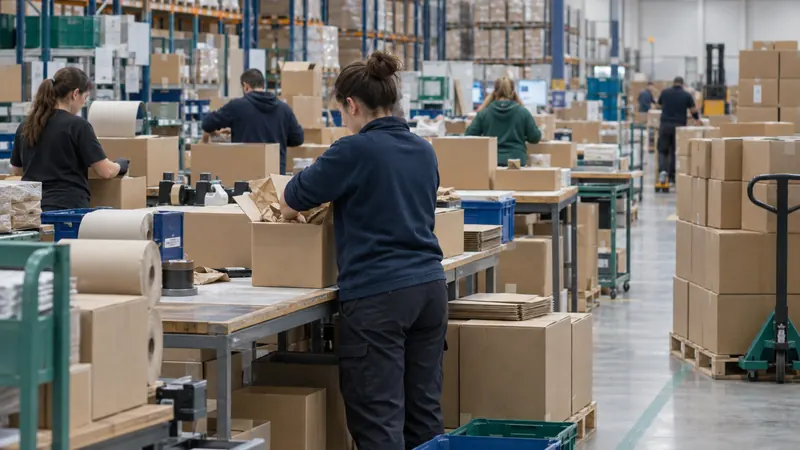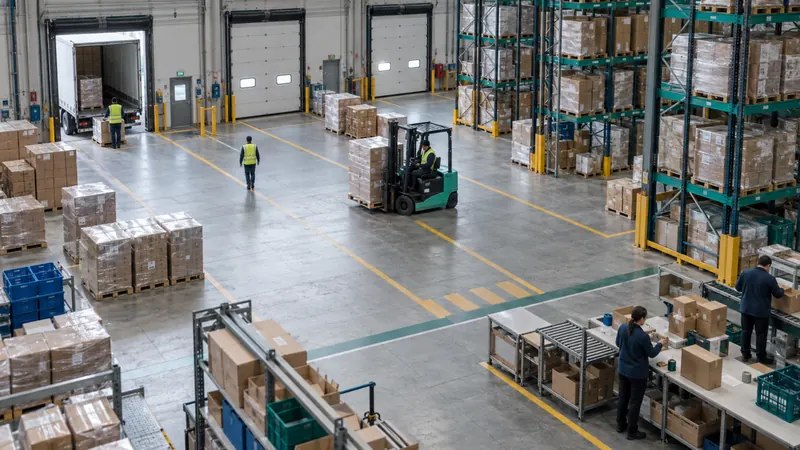
A warehouse that replenishes stores moves pallets and full cases. One that fulfills e-commerce moves units: hundreds or thousands of orders a day, most of them one or two lines, each with its own carrier label and a customer checking tracking on a phone. The same building, with the same staff, requires a different organization.
The Mexican market keeps growing. The 2026 Online Sales Study by AMVO, Mexico's online sales association, puts 2025 retail e-commerce at 941 billion pesos (the study gives about US$49 billion), up 19.2%, with 77.2 million online shoppers. The same study reports that receiving incomplete or damaged products is the customer's top complaint. Warehouse operations determine much of that experience. For US brands selling into Mexico, a local warehouse is often what makes delivery times and costs competitive.
How fulfillment differs from traditional distribution
| Aspect | Store distribution | E-commerce |
|---|---|---|
| Order size | Many lines, full cases | One to three units |
| Order count | Tens or hundreds a day | Hundreds or thousands a day |
| Pick unit | Case or pallet | Each |
| Packing | Wrapped pallet | Box or mailer per order |
| Deadline | Agreed delivery window | Carrier cutoff time |
| Returns | Few, by agreement | Frequent, from every customer |
Five organizing decisions
1. Slot by velocity, not by product family
In e-commerce, a small number of products accounts for most orders. Those go near packing, at waist height, in each-pick locations. Slow movers can be located farther away or higher. Review the classification every season: demand in November differs from demand in March.
2. Work backward from the cutoff
If the carrier picks up at 17:00, the last package must be closed and labeled before then. From that time, calculate when picking must finish and when orders must arrive to ship the same day. Publish that order cutoff in your online store and hold to it in the warehouse.
3. Group orders to cut travel
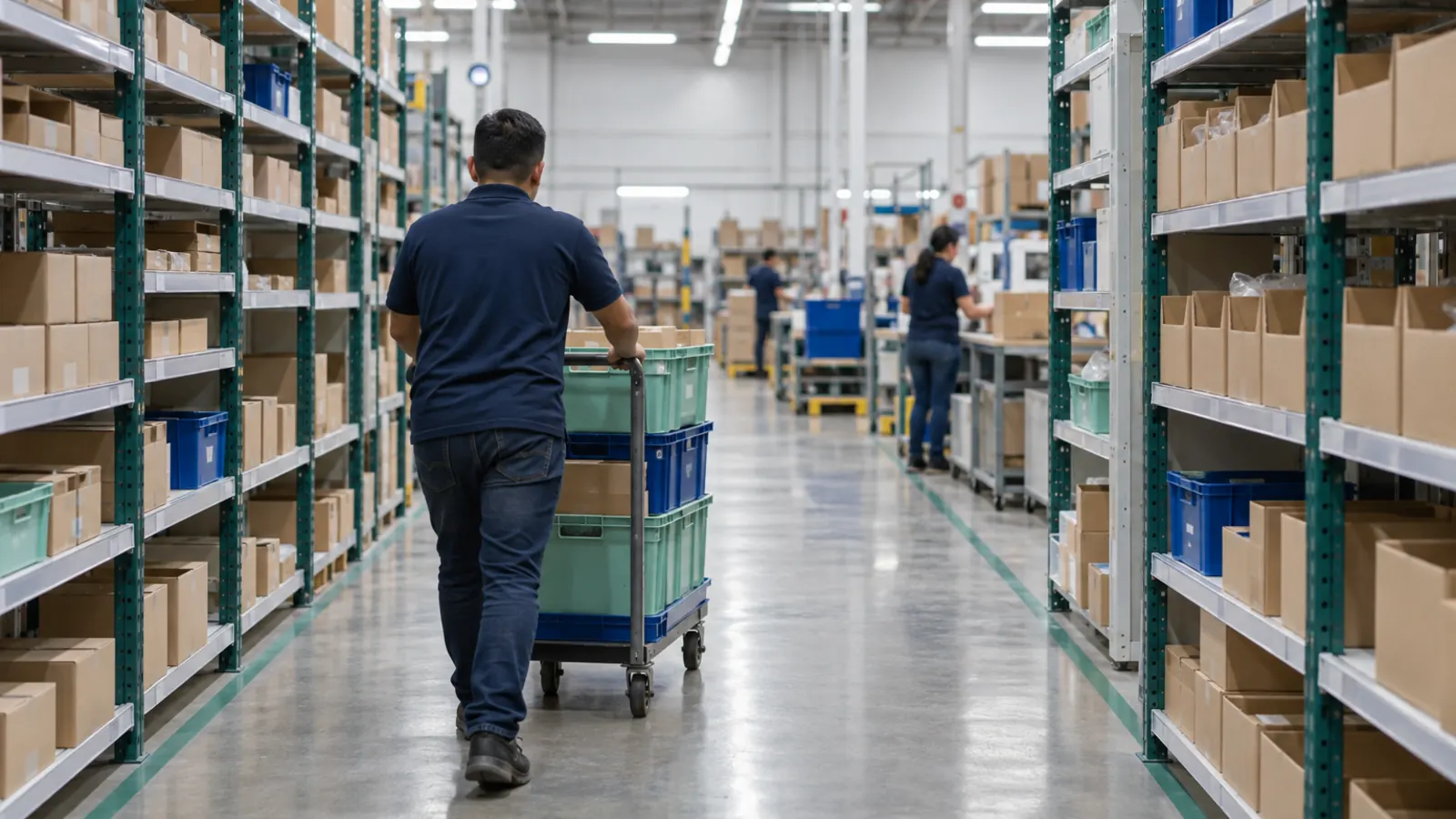
Picking one single-unit order per trip is not sustainable at high volumes. The common options are splitting the warehouse into zones with one picker per zone, and batching several orders in one trip with separate totes. The guide on picking methods compares them.
4. Validate every unit
On a one-unit order, an error affects the entire order. Scanning the location and the product on every pick, and each unit again at packing, stops most errors before shipment. The article on reducing picking errors details the controls.
5. Pack with evidence
A damaged or missing item claim is settled faster with a photo of the contents before the box is closed and with the package weight. Weight also makes it possible to audit the carrier invoice and dimensional weight charges.
Example: one day at an online store
A hypothetical case to show the sequence. A home goods brand receives an average of 900 orders a day with 1.4 units per order, and its carrier picks up at 16:30.
- 7:00 to 8:00. Overnight orders reach the warehouse by file or through the store integration and are released by zone.
- 8:00 to 13:00. Four pickers, one per zone, take batched orders on carts with totes. Each pick is validated by scan. Short picks are recorded on the spot.
- 9:00 to 15:30. Three packers receive the totes, scan each unit into the package, take the photo and record weight and dimensions.
- 13:00. Internal cutoff: anything later ships the next day, except urgent orders.
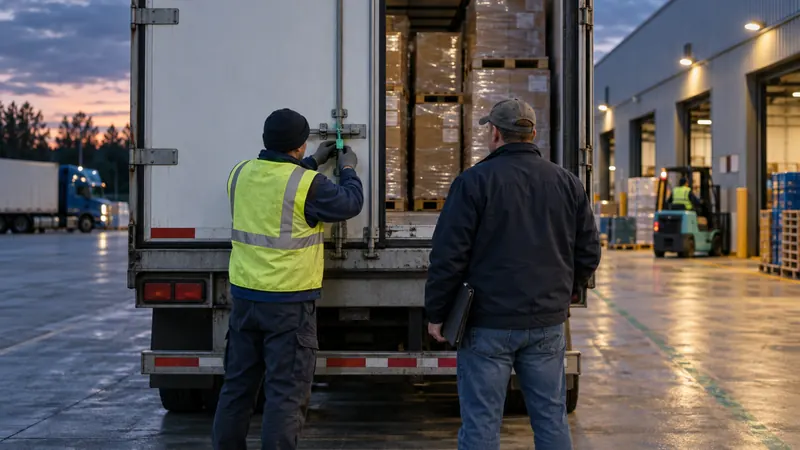
- 15:30 to 16:30. Loading: each package is scanned as it is handed to the carrier.
- Afternoon. Receiving and inspection of the day's returns.
Required capacity comes from your team's real lines per hour, not a vendor's figure. Measure a normal week before deciding how many people you need for peak season.
Returns are part of the flow
In e-commerce, part of what is sold comes back. If returns accumulate unprocessed, sellable stock decreases and the customer's refund is delayed. Define a returns area, an inspection with a disposition (restock, quarantine, scrap or return to supplier) and a processing deadline. The weeks after El Buen Fin and December carry the heaviest returns load of the year in Mexico, partly because, for sales made outside the seller's premises, Mexico's consumer protection law (Ley Federal de Protección al Consumidor, article 56) gives the buyer five business days from delivery to revoke the purchase.
How Chainlink handles it
In Chainlink WMS, orders arrive as outbound documents loaded by file or through the API. A document can be split by zone so several pickers work at once, and guided picking validates location, product and lot on every pick. At packing, each item is scanned into the package and only what was picked for the order is accepted; when the package is closed, weight and dimensions are recorded, and up to 8 evidence photos can be taken per order. If the company configures it, review requires a photo and everything picked to be packed.
Customer returns start from the original shipment: they are received into the returns location, in quarantine, and the inspection records condition, reason and disposition. The platform and the Android app are available in Spanish and English, which helps when the brand team works in English and the floor team in Spanish.
Frequently asked questions
What is e-commerce fulfillment?
It is the set of warehouse tasks that turn an online order into a delivered package: receiving and storing inventory, picking each order, packing it, handing it to the carrier and processing returns.
How many pickers are needed for the daily order volume?
It depends on your real lines per hour, the size of the warehouse and the cutoff time. Measure a normal week (orders, lines, units and hours worked) and calculate from that productivity.
Is order-by-order picking advisable?
With few orders a day, yes. With hundreds, grouping orders by zone or in one trip reduces travel, as long as every unit is validated at picking and at packing.
Share this article: LinkedIn