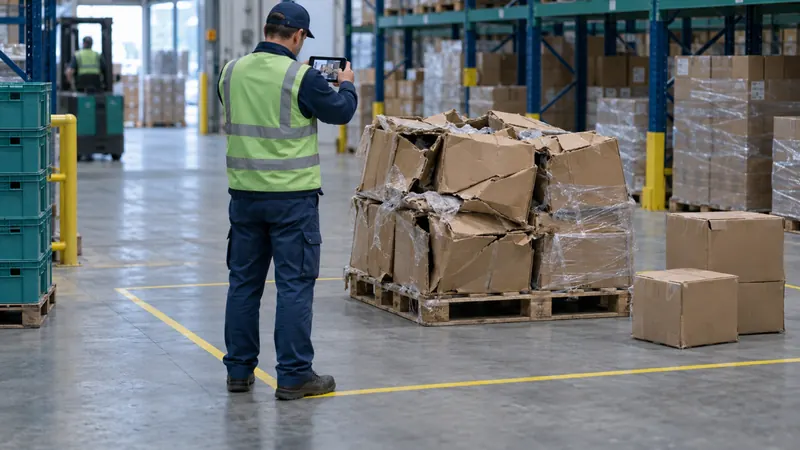
Small, repeated theft rarely appears as an isolated event; it appears as a recurring shortage: three units of a product in one count, five in the next, an opened case with fewer units than it should hold. Each case looks like a recording error; together, they represent a loss that many companies accept as normal shrinkage. In Mexico this pattern has its own name, robo hormiga, or ant theft, because it is carried out a little at a time.
Frequency in Mexico
INEGI, Mexico's national statistics institute, measures crimes against businesses in its National Business Victimization Survey (ENVE) 2024. According to its results presentation, ant theft accounted for 16.4% of crimes against businesses in 2023, third after extortion and robbery of goods, money or assets. Its rate rose from 776 to 1,002 crimes per 10,000 businesses between 2021 and 2023, a change INEGI flags as statistically significant. In the commerce sector it was the most frequent crime, and among mid-size businesses it was the second most frequent.
The survey does not separate warehouses from stores, but the pattern is the same: people with legitimate access removing small quantities each time. For a US company opening a facility in Mexico, it is a risk to address in the facility's design rather than at the first annual count.
Why warehouses are exposed
- Broad access. Many people enter every zone because the operation requires it.
- Records that can be corrected. If whoever picks or counts can also adjust stock, a shortage is erased with an adjustment.
- Predictable counts. An annual count on a known date leaves months to cover discrepancies.
- Goods without an assigned owner. Returns, damaged product and unrecorded overages have no assigned owner and can be removed easily.
- Accepted shrinkage. When small discrepancies are not investigated, theft cannot be distinguished from error.
Five controls that reduce it
1. Restricted access to high-value goods
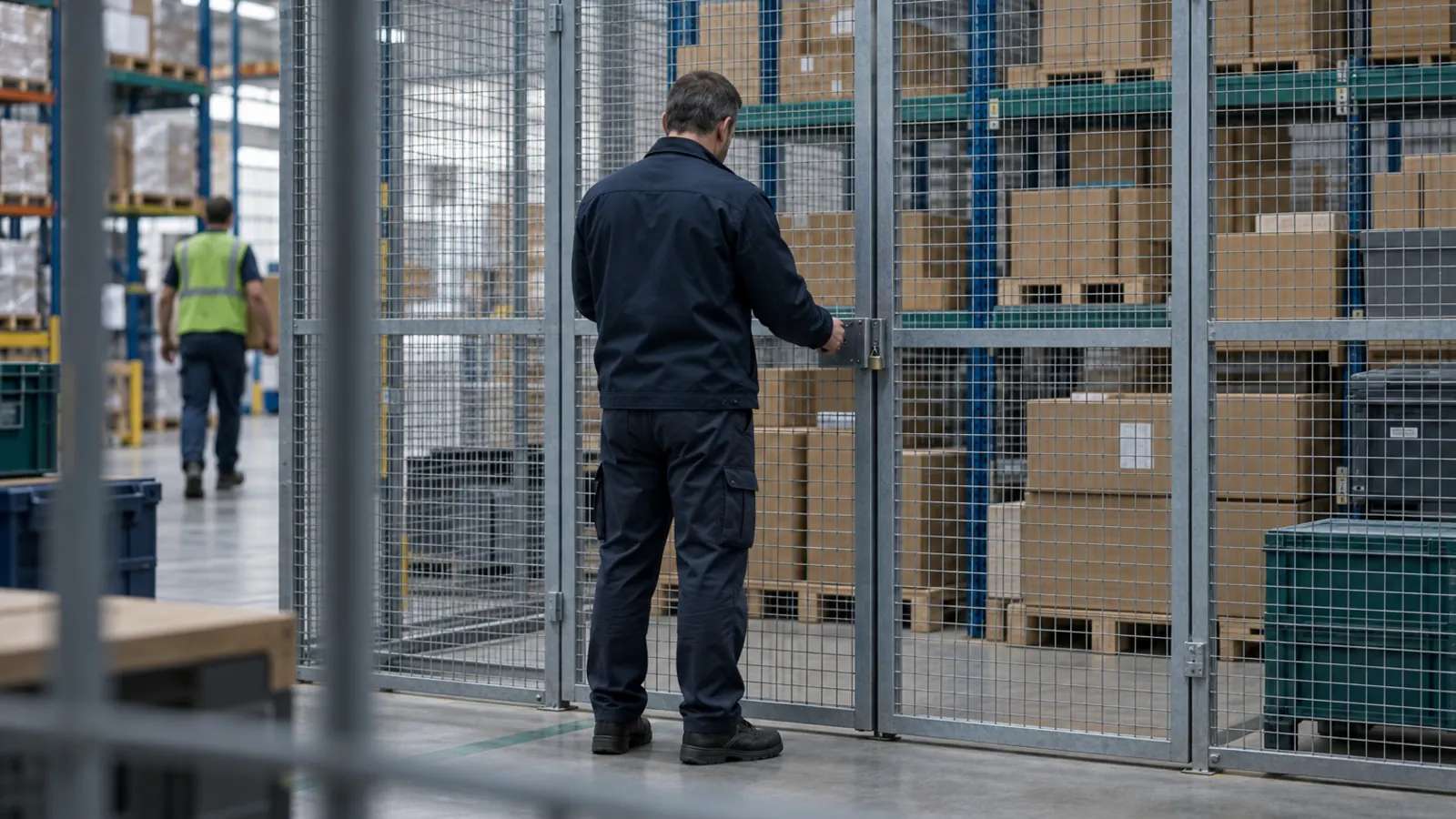
Identify high-value, easy-to-resell products (electronics, cosmetics, tools, spirits, spare parts) and store them in a closed zone, a cage or an area with controlled access. Only a small group picks from there, and every entry is recorded.
2. Segregation of duties
It is the lowest-cost control and the one most often overlooked. Whoever receives, puts away, picks or counts should not be able to post inventory adjustments. Another person, in a supervisory role, posts the adjustment after reviewing the discrepancy. With that rule, hiding a shortage requires two people.
3. Targeted, unannounced counts
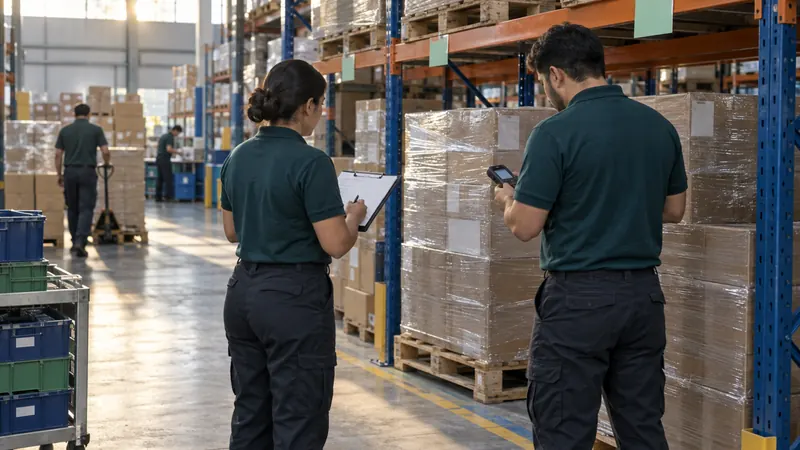
In addition to cycle counting by ABC class, schedule unannounced counts of sensitive products and of locations with recurring discrepancies. Rotate who is assigned each count: if the same person always counts the same zone, a shortage can pass several times without being reported.
4. Adjustments with approval and a reason
Every adjustment should carry a reason from a closed list (damage, expiration, receiving error, theft, count discrepancy) and an approver. Review adjustments monthly by product, location, reason and the person who proposed them. A product with frequent negative adjustments labeled "count discrepancy" requires an investigation.
5. A complete movement history
When every receipt, put-away, transfer, pick, return and adjustment is recorded with user, date and time, a discrepancy can be traced back to the last correct movement. The stock ledger is an investigation tool, not just an accounting report.
How to investigate a recurring shortage
- Confirm the shortage with a recount of the location and its neighbors, to rule out a misplaced put-away.
- Review the product history since the last correct count: receipts, issues, transfers and returns.
- Compare with documents: verify that issues on picks match what was invoiced and shipped.
- Look for the pattern: shift, zone, day of the week, assigned people.
- Document and escalate to security and to legal or HR according to your policy. In Mexico, measures involving employees (searches, discipline or criminal complaints) should be defined with local labor counsel.
How Chainlink controls it
In Chainlink WMS, inventory adjustments are posted by a user with an Administrative license: when a count is closed, results are split into matches, wrong location, overages, shortages and items not in the system, and the adjustment is applied after review. Each role declares its permissions and the license it requires, and no user can create or assign a role with more permissions than their own. Movement history records every movement with its user, document, origin and destination, and it is kept even after the person is deactivated.
A location can be blocked with a reason so its stock is not allocated to picks while it is investigated. In returns, scrapping and returning to the supplier require a supervisor's permission, and a return reason can require a photo. In the Professional and Enterprise plans, business rules can stop an action until a supervisor approves it, and Enterprise adds a verifiable audit log that can be sent to the company's security system.
Frequently asked questions
What is ant theft (robo hormiga)?
It is the repeated removal of small quantities of goods, cash or supplies, usually by people with legitimate access. Each event is small; the total can exceed a single large theft.
How is theft distinguished from a recording error?
By the pattern. Recording errors usually produce overages and shortages that offset each other; theft produces shortages in the same products and almost never overages. A recount of the location and its neighbors rules out put-away errors.
Which control should come first?
Segregation of duties: whoever moves goods should not be able to adjust inventory. It has a low cost and requires every shortage to be reviewed before it is adjusted.
Share this article: LinkedIn