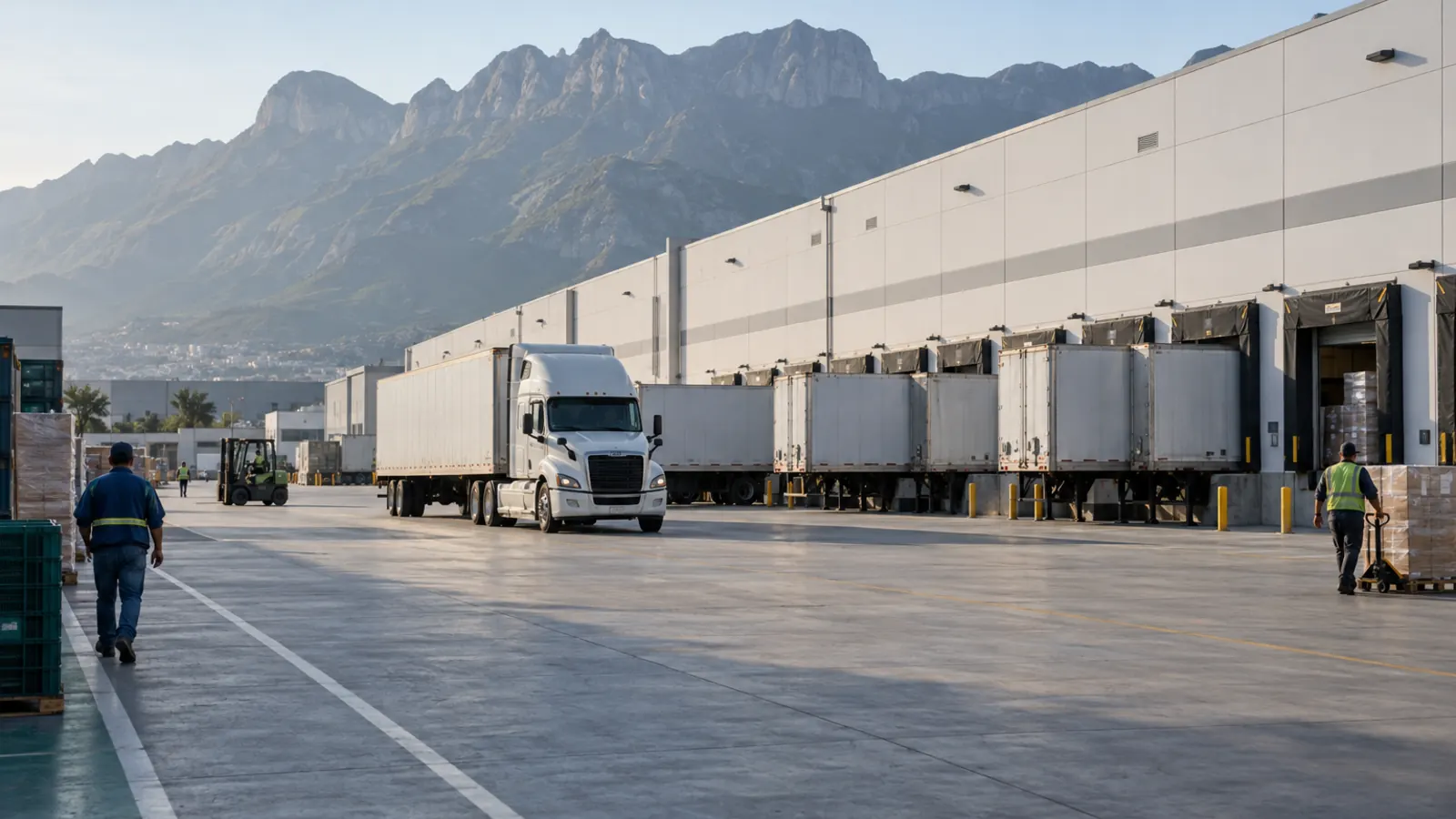
Nearshoring is now visible in industrial buildings, hiring and new suppliers in northern Mexico, the Bajío and the west of the country. For warehouse managers, the practical question is not whether the trend continues but what changes in daily operations when the company starts supplying customers abroad, or when a parent company opens a plant in Mexico.
The context in official figures
Mexico's Ministry of Economy reported that the country received US$40.871 billion in foreign direct investment in 2025, a full-year record for the fifth consecutive year, with the United States as the leading source country at US$15.877 billion (Ministry of Economy, National Foreign Investment Registry, figures as of December 31, 2025). Part of that investment is new or expanded plants and distribution centers, and each one requires a warehouse that is operational from the first shipment.
What customers abroad expect from the warehouse
Companies that buy from Mexican suppliers for their US or Canadian supply chain usually write requirements into their supplier manual that directly affect the warehouse. The most common:
- Lot or serial traceability. In a claim or a recall, the supplier must report which lots each customer received and when, and which raw materials went into each lot.
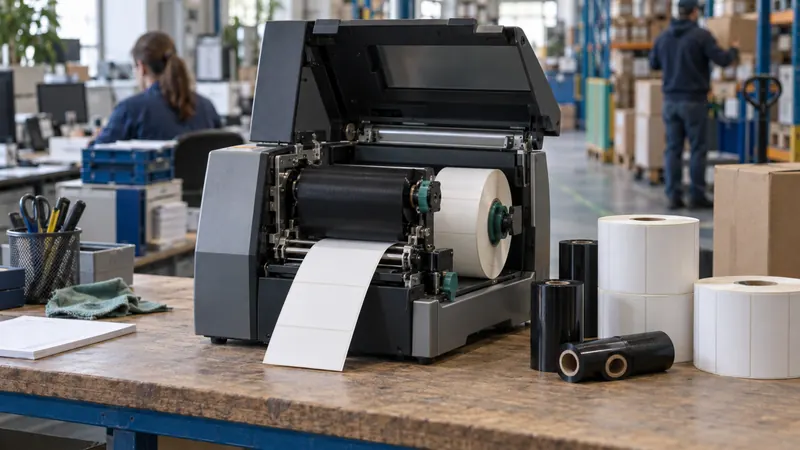
- GS1-standard labels. GS1-128 barcodes with Application Identifiers for product, lot, expiration and quantity, in the format and position the customer specifies.
- Advance ship notices. The detail of what travels in each shipment, sent before it arrives, so the customer can receive against it.
- Shipment accuracy. A short or wrong shipment results in customer chargebacks, returns at the supplier's expense and, if repeated, the loss of the customer.
- Supplier audits. The customer reviews on site how receiving, storage, segregation of nonconforming product and shipping are controlled.
All these requirements call for documented evidence. A record typed at the end of the shift into a spreadsheet does not pass an audit; one generated by a scan at the moment, with user and time, does.
Outside the scope of the WMS: customs control
Many exporting plants operate under Mexico's IMMEX program with temporary imports, and must keep the inventory control the customs authority requires, known as Annex 24 (Anexo 24). It is a separate system with its own rules for discharging imported materials.
A warehouse management system (WMS) such as Chainlink records physical operations: what came in, with which lot, which location it is in, where it went. It does not replace the Annex 24 system. What it does provide is orderly, complete movement data that the foreign trade team can reconcile with its own system.
What changes inside the warehouse
Raw materials with lots from receiving
In a plant, the raw materials warehouse is where traceability starts. If the supplier's lot is not captured at receiving, it cannot be reconstructed later. Reading lot and expiration from the supplier's GS1-128 barcode instead of typing them avoids the most common error: a lot entered with one digit wrong.
Picking to the production line
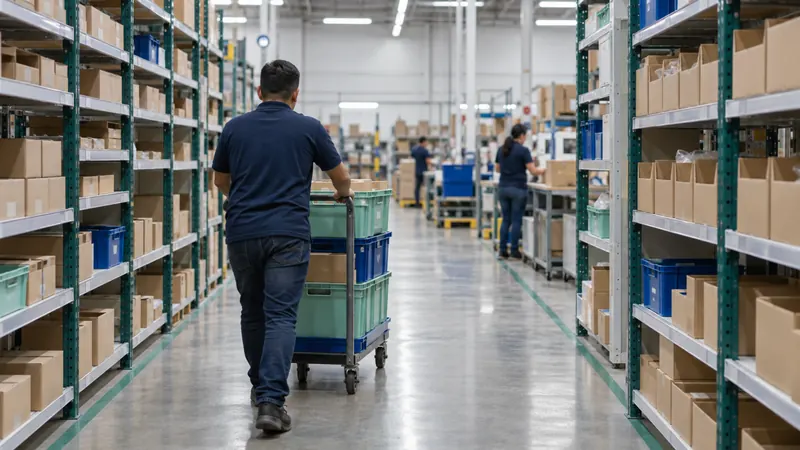
Production orders consume materials in exact quantities. The warehouse picks for the line with the same discipline as for a customer: location, product, lot and quantity validated by scan. A wrong material on the line results in a held lot of finished goods.
Finished goods and shipping
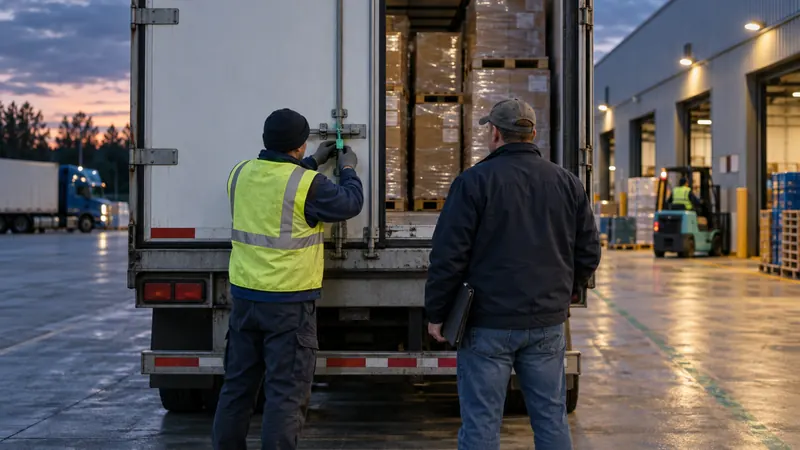
Finished goods are labeled in the customer's format, stored by lot and shipped against the order. Validating the shipment before the trailer doors close, by scan or with an RFID portal, costs less than handling the claim at destination.
Multiple warehouses and transfers
A plant commonly has its own warehouse, an outside one run by a logistics provider and sometimes a distribution center on the US side. Every transfer between warehouses must leave one place, travel in transit and be received at the other, without the goods leaving the record in transit.
The corporate ERP and language
A subsidiary of a foreign company usually inherits the parent's ERP. The warehouse needs to receive products, purchase orders and sales orders from that ERP and send back every receipt, shipment and adjustment. The guide on connecting a WMS to your ERP describes the data exchanged and the methods.
Chainlink WMS connects to SAP Business One, SAP S/4HANA, Odoo, Microsoft Dynamics 365 Business Central and ERPNext through connectors available as an add-on to the Professional and Enterprise plans, and offers an API in every plan. The web platform and the Android app are available in Spanish and English, so a supervisor at headquarters can see the same information as the local team. The English overview page lists which surfaces are available in each language.
New staff in competitive labor markets
A new plant hires dozens of people in a short time, often in industrial areas where several companies are looking for the same profile. A process that depends on memorizing the warehouse takes months to stabilize. A process guided by the handheld, in which each step is validated by a scan, allows a new hire to work correctly within days and stops errors at the moment rather than at the audit.
A checklist for a new operation's warehouse
- Document your customers' requirements for labels, advance ship notices and traceability before designing the process.
- Code locations from day one.
- Decide which products are lot-controlled and which serial-controlled.
- Agree with the foreign trade team on the movement data it needs for its Annex 24 reconciliation.
- Decide how the warehouse connects to the ERP and who owns each master data field.
- Write a short procedure per position and train with the real team.
- Measure from start-up inventory and shipping accuracy: those are the figures your customer will request.
Frequently asked questions
Can a WMS serve as the Annex 24 inventory control system?
No. Annex 24 is the inventory control for temporary imports that Mexican customs requires from IMMEX companies, with its own rules. A WMS records the warehouse's physical operations and can supply movement data for reconciliation, but it does not replace it.
What warehouse requirements do US customers usually set for a Mexican supplier?
Lot or serial traceability, GS1-standard labels, an advance notice for each shipment, accuracy in what is shipped and on-site supplier audits. The details are in each customer's supplier manual.
Is Chainlink available in English?
The web platform, the account portal and the Android app are available in Spanish and English. The public website and its help center are also available in English; the developer documentation is in Spanish.
Share this article: LinkedIn