When a company wants to sell through a retail chain or a marketplace in Mexico, or export from Mexico, one of the first requests is an "official" barcode. The usual questions are where to get it, what it costs and whether a number bought online is valid. This article summarizes the process in Mexico, answers the most common question from US companies (whether their existing GTINs work) and covers what the warehouse must resolve from the start.
What an official barcode is
The number in a product barcode is a GTIN (Global Trade Item Number). It is administered by GS1, an international nonprofit with a member organization in each country; in Mexico, GS1 Mexico. The brand owner joins, receives a company prefix and builds its products' GTINs from it. Each number is unique worldwide and tied to the company that assigned it.
A number bought from a reseller may scan, but it is not tied to your company in GS1's records, and many retailers and marketplaces reject it when they validate the catalog.
Requirements and steps at GS1 Mexico
According to GS1 Mexico's membership page, checked in October 2026, the process has three steps:
- Gather the requirements:
- A valid e.firma issued by the SAT, Mexico's tax authority, with its .cer and .key files and password.
- A tax status certificate (constancia de situación fiscal) less than 30 days old, in the name of the e.firma holder.
- The latest annual tax return (for companies and individuals with business activity).
- A valid official ID.
- Check the membership fee, which is set by the company's annual revenue. Membership is individual to one company. Newly formed companies without an annual return may be placed temporarily in the micro-business tier during their first year.
- Apply online, upload the documents, sign the contract and pay. The invoice and an invitation to training courses follow.
These requirements assume a Mexican taxpayer. Confirm current requirements and fees on GS1 Mexico's site before starting.
If you already have GS1 US numbers
GTINs are global. A product whose GTIN was assigned from a GS1 US company prefix can be sold in Mexico with the same number, and a product numbered by GS1 Mexico can be sold in the US. What changes is the usual symbol at the point of sale (UPC-A in the US and Canada, EAN-13 in Mexico; retail scanners in both countries read both) and each retailer's product data and labeling requirements, which must be checked in each chain's supplier manual before printing packaging. A Mexican subsidiary that launches its own brands can join GS1 Mexico for those products.
How to assign GTINs
With the prefix, the company assigns the numbers. The GS1 General Specifications set the rules; the ones that matter most for the warehouse:
- One GTIN per distinct product. Change the GTIN when content, size, flavor, color or any feature the customer distinguishes changes.
- One GTIN per packaging level. The each, the six-pack and the 24-unit case have different GTINs, so a scan tells a case from an each.
- Do not reuse numbers from discontinued products for new ones in the short term; your customers' systems may keep the old number.
- Keep a register of which GTIN belongs to which product and pack, with its description and dimensions.
Before printing
- Choose the symbol by where it will be scanned: UPC-A or EAN-13 on consumer packaging, ITF-14 or GS1-128 on the shipping case. The article on warehouse barcode types compares them.
- Respect size, quiet zones and contrast. Dark bars on a light background, side margins intact, never over a seam or fold.
- Verify print quality on a sample before producing all the packaging. GS1 Mexico offers verification services.
- Add lot and expiration when your product has them, on a GS1-128 label or a 2D code. The GTIN alone does not identify the lot.
What changes in the warehouse
With GTINs on your products, receiving, picking and packing can validate each unit with a scan instead of reading descriptions. To do so:
- Load the GTIN as each product's barcode in your system, with the unit it represents.
- Register the GTIN for each packaging level and its conversion factor (one case = 24 eaches).
- Read your suppliers' GS1-128 labels at receiving to capture lot and expiration without typing.
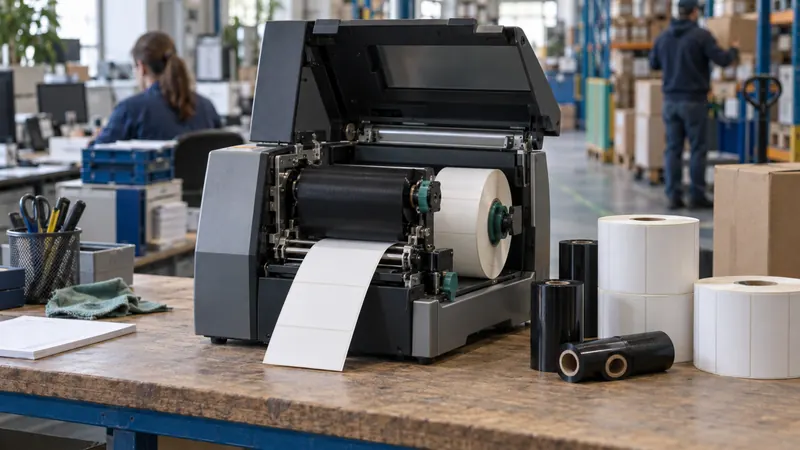
- Print missing labels from your system with templates that include the code and human-readable text.
How Chainlink uses it
In Chainlink WMS, each product records its floor barcode (EAN-13, UPC-A, Code 128 or another), its unit and its lot or serial control, and the catalog can be imported from an Excel or CSV template that shows errors row by row before anything is created. When a GS1-128 label is scanned at receiving, the app takes the GTIN, expiration date, lot and serial number when present and asks for anything missing. Product, location and pallet label templates are designed with a preview and print on Zebra printers from the web or the handheld. Chainlink does not assign or sell GTINs; your company obtains them from GS1.
Frequently asked questions
How much does a barcode cost in Mexico?
GS1 Mexico charges a membership fee based on the company's annual revenue, and the codes are generated under that membership. Check the current fee on its membership page.
Are new barcodes required to sell US products in Mexico?
Not if they already carry GS1 GTINs. GTINs are global and keep the same number in Mexico. Check each Mexican retailer's supplier requirements for product data and labeling.
Does the case need a different code from the each?
Yes. Each packaging level has its own GTIN, so a scan tells whether one unit or a full case moved.
Share this article: LinkedIn